SEO in 2026: Key Trends, Statistics, and What They Mean for Small Businesses
Search engine optimization continues to evolve rapidly as artificial intelligence, changing user behavior, and new digital platforms reshape how people discover information online.
While the tactics may change, one principle remains constant: smart marketing decisions must be grounded in real data.
Recent research compiling over 120 industry statistics provides valuable insights into where SEO is heading in 2026 and what businesses should prioritize moving forward (SE Ranking, 2026).
In this article, we break down the most important SEO trends and explain what they mean for organizations looking to grow their online visibility.
Organic Search Still Drives Nearly Half of All Website Traffic
Despite the rise of social media, AI assistants, and other discovery platforms, organic search remains the largest source of website traffic.
Recent research shows that organic search accounts for approximately 46.98% of all website traffic, making it the most significant driver of online visibility (SE Ranking, 2025).
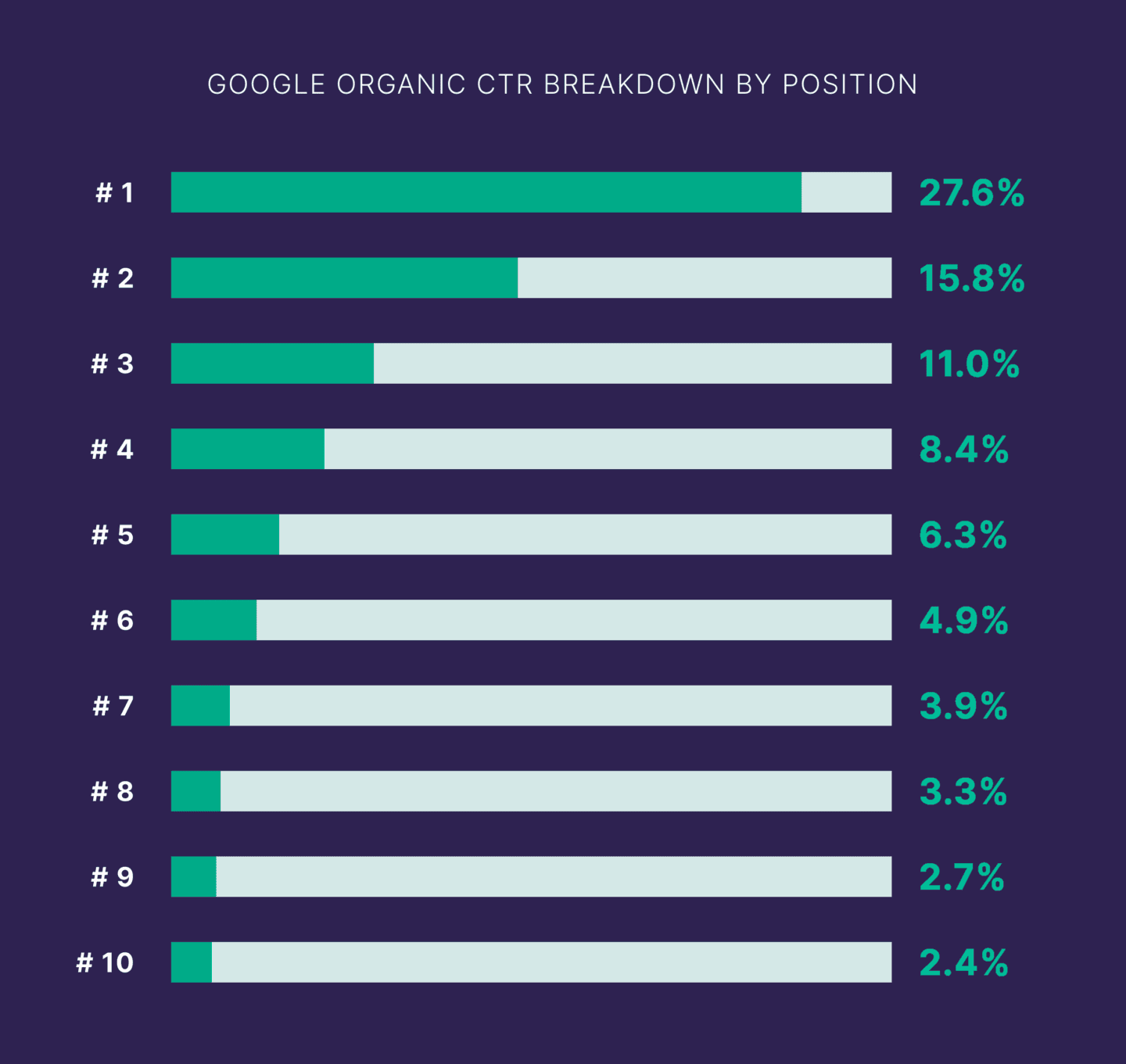
However, search traffic is highly concentrated at the top of the results page.
Studies show that:
• The first result on Google receives around 39.8% of clicks
• The second position receives about 18.7%
• The third receives roughly 10.2% (FirstPageSage, 2025)
Even more striking, the number one result is ten times more likely to receive a click than the tenth result (Backlinko, 2025).
At the same time, competition remains intense. Research suggests that 94% of webpages receive no traffic from Google at all (SE Ranking, 2025).
For businesses, this means that achieving strong search rankings requires a focused strategy combining content, technical optimization, and authority building.
Most Search Queries Are Educational
One of the most important insights about search behavior is that most users are looking for information rather than making an immediate purchase.
Search intent distribution typically looks like this:
• 70% informational searches
• 22% commercial research
• 7% navigational searches
• 1% transactional queries (SE Ranking, 2025)
This explains why high-performing SEO strategies often focus on educational content such as guides, case studies, and tutorials.
According to Orbit Media (2025), the most effective content formats include:
• Guides and ebooks
• Webinars
• Expert roundups
Businesses that provide useful information early in the customer journey are more likely to build trust and ultimately convert visitors into customers.

AI Is Transforming Content Production
Artificial intelligence is now playing a major role in content marketing.
Recent research indicates that AI-generated content now appears in 17.3% of Google’s top 20 results, a significant increase compared to just a few years ago (Originality.ai, 2025).
In addition, companies using AI tools produce 42% more content per month than those that do not (Ahrefs, 2025).
Marketers most commonly use AI for:
• Content ideation and brainstorming
• Outlining articles
• Editing and refining content
• Writing headlines (Orbit Media, 2025)
However, the rise of AI has also increased competition. A survey by Influencer Marketing Hub (2025) found that 58% of SEO professionals report significantly higher industry competition due to AI tools.
This means that while AI can accelerate content production, quality, expertise, and strategic differentiation remain essential for long-term success.
Technical SEO Remains a Major Opportunity
One surprising finding from recent SEO research is how many websites still struggle with basic technical optimization.
According to SE Ranking (2025):
• Only 54.6% of websites pass Google’s Core Web Vitals performance standards
• 50% of websites use duplicate meta descriptions
• 54% have duplicate title tags
• 36% contain pages returning 4XX errors
• Only 26% of websites use alt text for images
These issues may seem small individually, but collectively they can significantly affect search visibility.
For many organizations, improving technical SEO fundamentals can lead to meaningful ranking improvements without requiring large content investments.
Backlinks Still Play a Critical Role in Rankings
Despite constant changes to search algorithms, backlinks remain one of the strongest ranking signals.
Research shows that the top ranking page in Google typically has 3.8 times more backlinks than pages ranking in positions two through ten (Backlinko, 2025).
However, backlinks are still relatively rare.
• Approximately 95% of webpages have no backlinks at all (Backlinko, 2025)
• On average, 63% of backlinks point to a website’s homepage (SE Ranking, 2025)
High-quality backlinks typically come from content partnerships, media mentions, and authoritative websites referencing valuable resources.
For many organizations, investing in strong content and thought leadership can naturally generate these links over time.
Local SEO Is Essential for Small Businesses
Local search continues to play a major role in how people discover nearby services.
Research indicates that approximately 14% of all search queries are related to local information or businesses (SE Ranking, 2025).
When people search for local services, Google Maps results are especially influential.
• 42% of users click results within the Google Maps “Local Pack” (Backlinko, 2025)
Reviews also play a critical role in consumer decisions.
According to BrightLocal (2025):
• 74% of consumers check reviews on at least two websites before choosing a business
• 59% only consider businesses with ratings of four stars or higher
• 89% prefer businesses that respond to reviews
For local organizations, maintaining an optimized Google Business Profile and actively managing reviews is essential for visibility and credibility.
Mobile and Video Are Reshaping Digital Marketing
Mobile usage continues to dominate internet behavior.
Recent global data shows that mobile devices now generate over 62% of website traffic worldwide (Statista, 2025).
At the same time, video content is becoming a central part of online marketing.
• 94.6% of people watch online videos every week (We Are Social, 2025)
• 89% of businesses use video as part of their marketing strategy (Wyzowl, 2025)
• Videos now appear in 78% of Google search results pages (SE Ranking, 2025)
Short-form videos, live streams, and visual content consistently produce strong engagement across platforms.
Social Media Is Becoming Part of Search
Search engines increasingly reference social media content.
Research shows that approximately 50% of Google search results now include at least one social media platform in the top ten results (SE Ranking, 2025).
Platforms most frequently appearing include:
• YouTube
• Quora
TikTok is also emerging as a major discovery platform. Although it accounts for a smaller share of social traffic today, TikTok search traffic grew fivefold in 2025 (SE Ranking, 2025).
This trend suggests that future SEO strategies may need to combine traditional search optimization with social content strategies.
The Future of SEO
While search technology continues to evolve, the core principles of effective SEO remain consistent.
Successful organizations tend to focus on:
• Creating helpful, high-quality content
• Building authority through trusted backlinks
• Maintaining technically optimized websites
• Managing local reputation and reviews
• Adapting to emerging platforms such as AI search and video
The businesses that succeed in 2026 and beyond will be those that combine strong technical foundations with thoughtful, user-focused content.